
We’ve all driven past a parking lot or roadway that looked brand new just a few years ago, only to wonder why it’s already beginning to crack, ravel or show signs of wear.
While there are plenty of factors that influence pavement performance, one of the biggest often happened on the very day the asphalt was placed.
A paver can be fine-tuned. Screed settings can be adjusted. Material delivery can improve as the day goes on. Even small issues that pop up early in the project can often be corrected before the last truck leaves the job site.
Compaction is different.
Once the asphalt begins to cool, the opportunity to achieve proper density starts disappearing. Miss that window, and there’s no second chance. No amount of extra rolling after the mat has cooled will make up for density that was never achieved in the first place.
That’s why experienced paving contractors know compaction isn’t simply another step in the paving process—it’s one of the most important factors in determining how long a pavement will perform.
Why Density Matters
To the average driver, a newly paved parking lot or roadway looks finished as soon as the roller leaves the mat.
Contractors know better.
Most pavement failures don’t happen overnight. They develop little by little until one day someone notices the cracks, the loose aggregate or the wheel paths that weren’t there before. By then, the opportunity to prevent many of those problems has long passed.
What matters isn’t just how smooth the pavement looks on day one. It’s how well that pavement holds up after years of traffic, changing weather, heavy loads and repeated freeze-thaw cycles.
Proper compaction reduces the amount of air trapped inside the asphalt. Those remaining air voids play a significant role in determining how the pavement performs over time. Too many voids allow water and air to penetrate the surface, accelerating oxidation of the asphalt binder and weakening the pavement from the inside out.
It’s often a slow process. The pavement may look perfectly fine when the project is complete, but months or years later, the signs begin to appear—raveling, cracking, rutting, moisture damage or premature deterioration.
Many of those problems can be traced back to compaction.
The Compaction Window Is Short
Asphalt doesn’t stay workable for very long.
Ask just about any roller operator, and they’ll tell you the same thing—the clock starts ticking the moment the mix hits the ground. Every decision after that has to keep pace with the cooling asphalt.
Every minute after the mix leaves the paver, temperatures continue to fall. As the material cools, it becomes increasingly difficult to achieve the density needed for long-term performance.
That’s why roller operators, paver operators, truck drivers and the entire paving crew have to work together. Good compaction isn’t the responsibility of one person—it’s the result of a well-coordinated operation.
Material delivery, paving speed, roller patterns, weather conditions, lift thickness and mix temperature all influence how much time crews have to complete the rolling process.
Experienced contractors understand that staying ahead of the cooling curve is every bit as important as staying on schedule.
It’s More Than Just Rolling Back and Forth
From the outside, compaction can look simple.
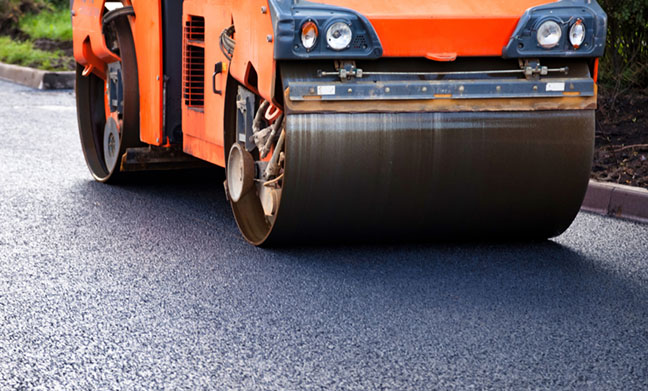
To someone driving by the job site, it might look like the roller is simply making pass after pass across fresh pavement. Experienced paving crews know there’s a lot more happening than meets the eye.
Effective compaction requires planning, consistency and attention to detail.
Choosing the right roller for the application, establishing an effective rolling pattern, maintaining proper overlap, monitoring roller speed and knowing when to stop are all critical parts of the process.
Rolling too little leaves density on the table. Rolling too much after the mix has cooled wastes time and fuel without improving the pavement.
Like many aspects of paving, experience matters.
The best roller operators aren’t simply driving equipment. They’re constantly reading the mat, watching temperatures, adjusting to changing conditions and working with the rest of the crew to produce consistent results.
Compaction Protects the Entire Investment
Every paving project represents a significant investment.
Whether it’s a small commercial parking lot or miles of state highway, every owner expects the same thing—a pavement that’s going to perform for years, not one that needs attention long before anyone expected it would.
Proper compaction helps make that happen. It protects against moisture infiltration, improves resistance to rutting, strengthens the bond between aggregate particles and helps the pavement withstand years of traffic and environmental stress.
In many ways, compaction protects all the work that came before it.
The best mix design, careful plant production, smooth paving operation and experienced crew can only deliver their full value if the pavement reaches the density it was designed to achieve.
The Difference Shows Up Years Later
One of the interesting things about compaction is that its success isn’t always obvious immediately after the project is finished.
Picture two parking lots paved on the same day with similar crews, similar equipment and similar materials. On opening day, they look nearly identical.
Five or 10 years later, the story can be completely different.
One continues carrying traffic with only routine maintenance. The other is already showing signs of cracking, raveling or early deterioration. While many factors influence pavement life, proper compaction is often one of the biggest reasons one pavement outlasts another.
The Bottom Line
Compaction doesn’t always get the attention it deserves.
The paver often steals the spotlight, while the rollers quietly follow behind doing work that’s just as critical to the pavement’s long-term success.
The truth is, you only get one chance at compaction.
When crews understand the importance of timing, communication, proper rolling techniques and achieving target density before the mat cools, they’re building more than smooth pavement. They’re building pavements that perform better, last longer and deliver greater value to their customers.
Customers may never ask what density was achieved, what rolling pattern was used or how many passes the roller made. What they will notice is whether the pavement still looks and performs the way they expected years down the road.
Because long after the last truck leaves and the striping is complete, compaction is still doing its job.


