by Marvin Joles
I am an advocate for doing it right the first time. Why? Let me tell you.
There is a Silent Killer of your sealcoating jobs. One you might not even know is there until months later.
In the asphalt maintenance world, most failures don’t happen because the product was bad from the plant, or the spray wand didn’t have the right tip in it. They happen because the surface wasn’t clean enough before the first drop of sealer hit it.
Think about it: sealcoating is not paint. It’s a protective barrier that needs to bond with the asphalt surface at a microscopic level. If dust, dirt, oil, or vegetation is in the way, you’ve just created a layer between the sealer and the pavement that acts like Teflon. That bond will fail. Sometimes in months, sometimes in days, and sadly in some pictures we see online…in hours.
Dirt Doesn’t Just Sit There my Friend, It Works Against You
A speck of dust might seem harmless, but here’s the reality:
• Dust and grit act like tiny ball bearings, preventing sealer from anchoring to the asphalt pores. Grab the steel broom and get some elbow grease behind it.
• Loose aggregate left behind from traffic wear is like laying sealer on marbles. The material shifts and flakes right off. If you are going to take the time to blow the surface off, be thorough.
• Oil stains create invisible “bond breakers.” Without proper degreasing, your sealer will bead up and slide off like water on a waxed car hood.|
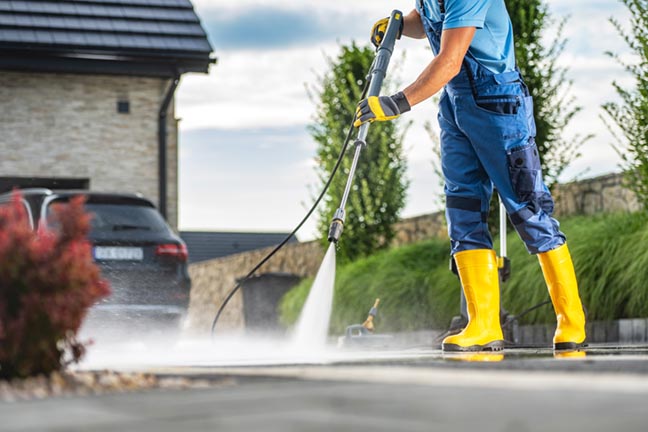
• Moss, grass, and algae trap moisture under the coating, leading to blisters and early failure. If you have to pressure wash it or hire it out to get it free and clean, do it.
You can’t “seal over” these problems and pray. You can only delay their exposure and when they finally show, it’s always your reputation that takes the hit. I have been known for being a real stickler at Wis-Coat about this. But the 2 decades of repeat customers and higher price points in which we sell work than our competitors shows that our reputation for doing it right, has value.
The Science of Bonding
Sealcoating relies on penetration into the upper layer of the asphalt’s void structure. That’s where it seeps in and locks down. If dust or debris fills those voids, you’re sealing onto a contaminant, not the asphalt itself. It will look like it’s going to hold, but in time, it can wear much faster.
That’s why a proper prep process involves:
1. Mechanical Cleaning: High-powered blowers, steel brooms, and scrapers to remove stubborn debris. If you can get a sweeper to help, do it. Even an attachment for your combi string trimmer or broom for your skiddy.
2. Targeted Oil Treatment: Biodegradable degreasers or hot water pressure for oil-soaked areas. Then even a “Primer” if need be.
3. Detail Work: Wire brushing around curbs, posts, and seams where debris tends to hide. I have about four small wire brushes, think toothbrush size, on the truck to get the small and hard to reach places.
4. Final Inspection: Walking the lot with trained eyes to spot and clean missed spots before spraying.
Pressure washing alone may look clean, but if it leaves fine silt in the pores, you’ve only traded big dirt for little dirt. So be wary of thinking it solves it and try to deter your client from doing it before you arrive.
The Financial Equation Nobody Talks About
Skipping proper cleaning might save you 15 minutes per job — but it can cost you thousands in warranty work, callbacks, and reputation loss.
Here’s how it plays out my friends (trust me on this):
• Poor prep = Poor adhesion
• Poor adhesion = Visible peeling and premature wear
• Premature wear = Angry customers & negative word-of-mouth
• Negative word-of-mouth = Lost bids you never even got to compete for
Sealcoating is a margin business. The cheapest fix is prevention, and the best prevention is a spotless surface. Does that mean sweeping more and taking more time, yes. Deal with it if you want longevity in this game.
My Non-Negotiable Rule at Wis-Coat
I tell my crews, “Clean it as if you were me, and it was my own driveway”. It gets a laugh or a scowl, but it also sets the standard.
When we prep a lot, we’re not just blowing off leaves; we’re removing every possible barrier to adhesion. Because our name is literally stuck to that job for years.
The Last Thought on it All
A clean surface isn’t just a box to check. It’s the foundation of everything you promise your customer and what they hope for. Give them what they hope for and more than they expect.
Whether you’re sealing a driveway or an airport runway, the success of that job is decided before the first gallon of sealer is mixed. Clean pavement is your best insurance policy. And in this business, insurance is priceless and hard to get cheap. Demand more of yourself and the standard you set, it will improve your business brand and the image of our trade/industry as a whole, where we all win.
As always, if you have any questions, insight or criticisms about this article or anything in it, please feel free to email me at marvinjoles@gmail.com and of course, reach out to me using any form of social media (@inthemixmj).
Stay In The Mix. -Marvin
Marvin Joles is the owner of Wis-Coat Asphalt Maintenance. Visit his website at https://marvinjoles.com